The method behind Aluminum Foundry and why it counts
Wiki Article
Discovering the Conveniences and Applications of Aluminum Foundry in Modern Production
Aluminum factories play a considerable duty in modern manufacturing throughout different fields. Their capability to generate lightweight, resilient elements is particularly useful in markets like auto and aerospace. Aluminum Foundry. The advanced spreading strategies utilized allow for complex layouts that enhance product performance. Nevertheless, the effects of Aluminum production expand beyond immediate benefits. Recognizing these dynamics raises crucial questions about future innovations and sustainability practices in this essential sectorRecognizing Aluminum Foundries: An Introduction
Aluminum factories play an important role in the production market by concentrating on the casting of Aluminum products. These centers utilize different techniques, consisting of sand casting, pass away casting, and investment spreading, to create components varying from automobile components to consumer products. The procedure starts with melting Aluminum, followed by pouring it into molds to attain wanted shapes.Foundries are outfitted with sophisticated modern technologies that enhance effectiveness and accuracy in production. Proficient labor is vital in handling the elaborate procedures and guaranteeing quality assurance throughout the procedure.
In addition to creating common items, Aluminum foundries frequently satisfy custom-made orders, allowing services to develop distinct elements customized to details applications. The convenience of Aluminum, integrated with the expertise of Foundry workers, enables for innovation in style and performance, making Aluminum factories an essential component in the wider manufacturing landscape.
Key Benefits of Aluminum in Production
The advantages of Aluminum in manufacturing are numerous, adding to its widespread use across different sectors. One of the primary advantages is its light-weight nature, which significantly decreases power usage throughout transport and handling. In addition, Aluminum displays excellent deterioration resistance, making it optimal for applications in severe settings. Its high strength-to-weight ratio guarantees that items preserve architectural stability while remaining simple to adjust.Aluminum's adaptability enables an array of manufacture approaches, consisting of casting, machining, and extrusion, providing suppliers with flexibility in design. Moreover, the material is highly recyclable, promoting sustainability and decreasing total environmental effect. Aluminum additionally uses remarkable thermal and electric conductivity, making it ideal for various applications, including heat exchangers and electric parts. With each other, these benefits underscore Aluminum's essential duty in modern-day manufacturing, improving efficiency, reducing expenses, and sustaining ingenious product growth across multiple fields.
Applications of Aluminum Foundries in the Automotive Industry
In the automobile sector, where weight reduction and fuel efficiency are critical, Aluminum factories play an essential duty in making elements that fulfill these needs. The light-weight nature of Aluminum permits for the manufacturing of important parts such as engine blocks, transmission real estates, and wheels, which add to overall car performance. Additionally, Aluminum's outstanding deterioration resistance improves longevity, minimizing maintenance costs for makers and customers alike.Aluminum factories also enable the development of complex geometries with innovative spreading strategies, enabling for cutting-edge layouts that improve the rules of aerodynamics and performance. In addition, the recyclability of Aluminum aligns with the market's growing focus on sustainability, promoting the manufacturing of environment-friendly lorries. As auto suppliers progressively seek to stabilize efficiency with environmental duty, Aluminum shops are coming to be integral to the growth of next-generation cars, driving innovation and efficiency in the market.
The Duty of Aluminum in Aerospace Engineering
A lightweight and solid material, Aluminum has ended up being progressively vital in aerospace engineering, a lot like its role in the automobile field. Its positive strength-to-weight ratio permits the design of fuel-efficient airplane, adding to decreased functional expenses and lower discharges. Aluminum alloys are commonly used in aircraft frameworks, including fuselages, wings, and other critical components, providing excellent corrosion resistance and toughness.The pliability of Aluminum assists in complicated forms and designs, which are vital for the rules of aerodynamics. The product's thermal conductivity also plays an important function in handling heat in various aerospace applications. As the aerospace market proceeds to develop, the assimilation of Aluminum foundries sustains technologies in making processes, boosting precision and lowering waste. This fad emphasizes the relevance of Aluminum in generating advanced, lightweight frameworks that fulfill the stringent security and performance standards of modern-day aeronautics.
Developments in Customer Electronics Via Aluminum Foundries
Aluminum factories add substantially to advancements in consumer electronic devices by giving light-weight products that improve portability. Furthermore, the premium warmth dissipation homes of Aluminum aid to enhance tool efficiency and longevity. These advantages position Aluminum as a principal in the development of contemporary digital devices.Light-weight Product Advantages
Customer electronics require lightweight products for boosted transportability and effectiveness, Aluminum foundries have arised as essential players in meeting this need. The unique buildings of Aluminum, including its high strength-to-weight ratio, make it an ideal selection for manufacturers aiming to minimize product weight without endangering resilience. By making use of innovative spreading methods, Aluminum factories can develop elaborate, light-weight components that fit perfectly into numerous electronic tools. This technology not just enhances the individual experience but additionally supports power performance, as lighter gadgets commonly eat much less power. Furthermore, the flexibility of Aluminum allows for innovative designs, allowing makers to press the limits of appearances and functionality. As a result, Aluminum foundries play an essential duty in the evolution of customer electronic devicesImproved Warmth Dissipation
Customer electronics significantly rely upon materials that not only reduce weight yet likewise boost performance. Aluminum, with its exceptional thermal conductivity, plays a crucial duty in taking care of warm dissipation in tools such as laptops, mobile phones, and pc gaming consoles. Making use of Aluminum Foundry methods permits manufacturers to produce detailed designs that optimize air flow and cooling effectiveness. This technology leads to improved device efficiency and longevity, as getting too hot can significantly affect electronic elements. In enhancement, Aluminum's light-weight nature adds to a lot more mobile designs without jeopardizing thermal administration. As consumer demands for smooth, high-performance devices remain to climb, Aluminum foundries are necessary in establishing options that attend to these obstacles while making sure individual contentment and tool reliability.Sustainability and Environmental Impact of Aluminum Production
As sectors significantly focus on sustainability, the environmental impact of Aluminum production has actually come under examination. The extraction and refining of bauxite ore into Aluminum is energy-intensive, often depending on fossil gas, which add to greenhouse gas discharges. Nevertheless, the Aluminum industry is making strides towards reducing its carbon impact. Reusing Aluminum, for circumstances, needs only 5% of the power needed for primary manufacturing, significantly reducing emissions and source usage.Developments in manufacturing methods intend to enhance effectiveness and reduce ecological degradation. Firms are progressively buying renewable resource sources, such as wind and solar, to power their procedures. Making use of closed-loop water systems and waste reduction strategies likewise mitigates water contamination and source waste.
Future Patterns in Aluminum Foundry Modern Technology

Automation and Robotics Combination
While several markets are welcoming technological innovations, the Aluminum Foundry market is positioned for considerable transformation with automation and robotics assimilation. This shift intends to boost production performance and decrease labor prices. Automated systems can perform repeated jobs with precision, lessening human error and enhancing result consistency. Robotics can additionally help with intricate operations such as mold handling, putting, and top quality evaluations, bring about improved safety and security and reduced work environment threats. Additionally, the integration of sophisticated robotics permits for real-time monitoring and data analytics, enabling makers to maximize processes constantly. As the market embraces these modern technologies, it is anticipated that the Aluminum Foundry will certainly experience increased competitiveness and development, setting a new criterion for making techniques in the sector.Sustainable Manufacturing Practices
With automation and robotics reshaping the Aluminum Foundry landscape, a concurrent shift towards lasting manufacturing techniques is becoming increasingly prominent. Foundries are adopting energy-efficient technologies that decrease carbon emissions and lower energy intake. The assimilation of reusing procedures allows for the use of scrap Aluminum, lessening waste and preserving natural deposits. Furthermore, improvements in casting methods, such as 3D printing, make it possible for extra reliable material usage, decreasing the ecological impact. Business are also focusing on water preservation by carrying out closed-loop systems that recycle water within the production cycle. As industry stakeholders identify the value of sustainability, regulative compliance and customer demand will better drive the adoption of these practices, placing Aluminum shops as leaders in ecologically responsible production.Often Asked Questions
What Sorts Of Aluminum Alloys Are Frequently Used in Shops?
The sorts of Aluminum alloys commonly used in shops consist of 3xx.x collection, recognized for outstanding rust resistance, and 4xx.x series, which supplies excellent fluidness. These alloys are favored for numerous casting applications in making processes.Just how Does the Aluminum Casting Process Differ From Various Other Metal Casting Procedures?
The Aluminum spreading process includes melting Aluminum and putting it into molds, varying from various other metals that may call for higher temperatures or various techniques - Aluminum Foundry. This process permits intricate styles and light-weight parts, enhancing convenience in manufacturing applicationsWhat Precaution Are Taken in Aluminum Foundries?
In Aluminum foundries, security procedures include individual safety tools, proper ventilation systems, regular devices upkeep, and training programs. These procedures intend to decrease threats linked with heat, fumes, and managing liquified steel, making certain employee safety and security.Can Aluminum Foundries Recycle Scrap Aluminum Effectively?
Aluminum foundries can effectively recycle scrap Aluminum, utilizing advanced processes to melt and reprocess materials. This not only reduces waste but also conserves energy and resources, adding to an extra lasting manufacturing environment overall.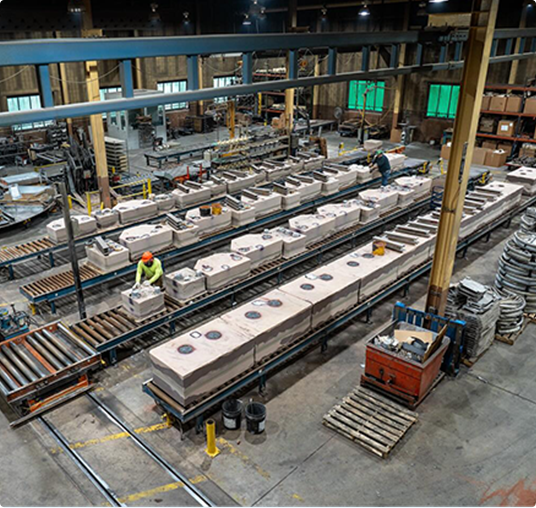
What Is the Common Lead Time for Aluminum Castings Production?
The normal preparation for Aluminum spreading production varies, typically varying from 2 to 8 weeks. Aspects affecting this timeline consist of layout intricacy, manufacturing quantity, and the Foundry's functional capability and organizing effectiveness.Aluminum factories play a crucial duty in the production field by specializing in the spreading of Aluminum items. In addition to creating conventional products, Aluminum foundries frequently cater to customized orders, allowing companies to develop unique components customized to certain applications. As the aerospace market continues to evolve, the combination of Aluminum foundries supports innovations in making procedures, enhancing accuracy and reducing waste. The Aluminum spreading procedure entails melting Aluminum and putting it right into mold and mildews, varying from other metals that might need higher temperatures or various methods. Aluminum shops can effectively reuse scrap Aluminum, utilizing advanced processes to melt and recycle Aluminum Foundry materials.
Report this wiki page